Hospital Telehealth RFP: What Most Vendors Miss
Hospital telehealth RFPs scatter across dozens of portals, close faster than most vendors expect, and carry compliance filters that eliminate unprepared bidders. Here is how to find them, meet the requirements, and assess fit before writing a single page.

As of September 2026, 204 open hospital solicitations close within the next 14 days, and most telehealth vendors have not found them yet. Health systems, hospital networks, and public health agencies issue solicitations for virtual care platforms, remote patient monitoring, and connected health infrastructure across dozens of portals, often under terminology that standard keyword searches miss. Layer in HIPAA compliance filters, FHIR R4 interoperability mandates, and contract vehicle requirements that eliminate unprepared vendors before evaluators reach the technical section, and the cost of late discovery compounds fast.
Key takeaways
- Hospital telehealth RFPs live across multiple portals, from SAM.gov to state eProcurement systems like NY State Contract Reporter and CalProcure to health system procurement pages, often under different terminology.
- The first filter is compliance, not scope: HIPAA, FHIR R4, and state licensure rules eliminate vendors before evaluators reach the technical approach.
- Half the market uses different terminology for the same need: "virtual care," "remote patient monitoring," and "connected health" all describe telehealth procurement.
- Knowing the incumbent vendor shapes your pricing and your decision to bid at all, yet this intel rarely appears in the RFP itself.
- Volume is larger than most vendors expect: as of September 2026, 539 open solicitations mention "hospital" and 645 new ones were posted in the last 30 days alone.
The short answer
A hospital telehealth RFP is a formal procurement document issued by a health system, hospital network, or public health agency soliciting bids for virtual care technology, remote patient monitoring, or connected health infrastructure. These solicitations appear on federal portals like SAM.gov, state eProcurement platforms like NY State Contract Reporter and CalProcure, and health system procurement pages. Winning one requires navigating HIPAA compliance, FHIR R4 interoperability mandates, and state licensure requirements before a single word of the technical approach is written. The vendors who consistently win find opportunities early, confirm compliance fit, and know who currently holds the contract.
Where hospital telehealth RFPs are posted
Start with the sources that aggregate the most volume, then layer in the sector-specific portals that generalist tools miss. SAM.gov covers federal health agencies including the Department of Veterans Affairs, the Health Resources and Services Administration, and the Indian Health Service. State Medicaid agencies and public health departments publish bids through official eProcurement systems: in New York, the NY State Contract Reporter; in California, CalProcure. Health networks and integrated health systems post solicitations on their own procurement pages, through BoardDocs board agenda archives, or via group purchasing organizations. No single portal captures the full market, which is why vendors who rely on one or two sources consistently miss bids their competitors win.
What the compliance section actually requires
Read the compliance requirements before the scope of work, because HIPAA, interoperability, and licensure rules are elimination criteria, not scoring criteria. Most hospital telehealth RFPs require documented HIPAA compliance and a Business Associate Agreement framework before the evaluator reaches the technical section. FHIR R4, the current federal interoperability standard tied to CMS and ONC incentive programs, appears with increasing frequency: solicitations connected to federal health IT initiatives often name it explicitly as a technical requirement. Vendors pursuing federal opportunities should also verify contract vehicle eligibility before a solicitation releases. CIO-SP3, the NIH-administered Health IT GWAC, is one of the most widely cited vehicles in hospital health IT solicitations, and not holding it at bid release can be a disqualifying condition. State telehealth licensure requirements vary by geography and must be confirmed before committing to a response.
Finding hospital telehealth RFPs at scale
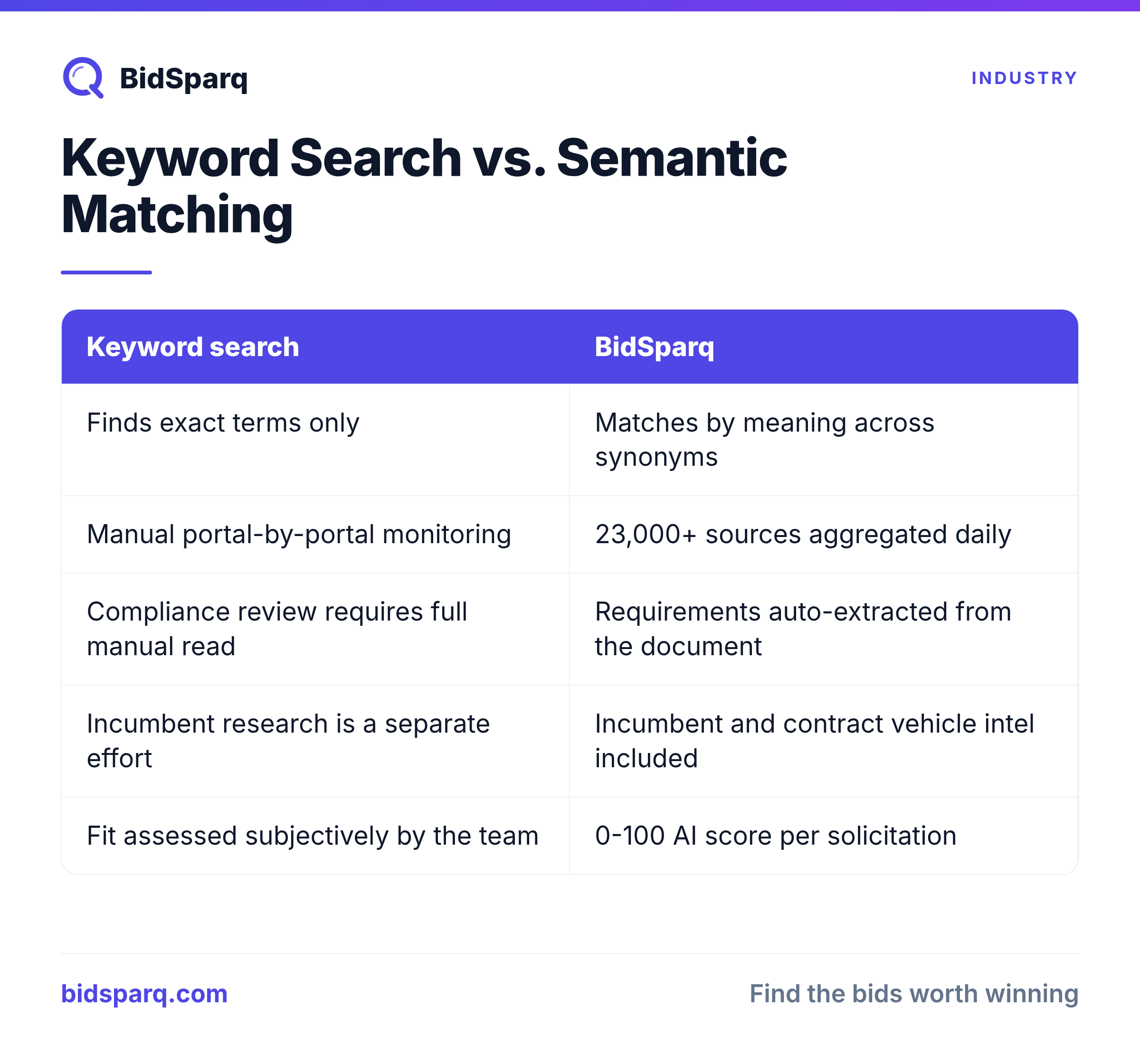
The core challenge is not finding individual opportunities; it is finding all the relevant ones before they close. As of September 2026, 56,966 solicitations are open across the 23,000+ sources BidSparq aggregates. Of those, 539 mention "hospital" and 645 new hospital solicitations were posted in the last 30 days. A platform that treats "virtual care RFP," "remote patient monitoring solicitation," and "telehealth services bid" as the same underlying need, rather than requiring separate keyword searches across each portal, gives a complete pipeline view instead of a fragmented one. Running those searches manually, daily, across dozens of portals is a full-time job on its own. Of those open hospital solicitations, 204 close within the next 14 days.
See your hospital telehealth RFP matches free and know your fit before you invest a single hour in the proposal. No credit card required.
How to assess fit before writing a single page
Not every hospital telehealth RFP is worth a full proposal effort, and a disciplined go/no-go process is how profitable vendors stay profitable. Assessing fit means checking compliance eligibility first, then scoring your solution against the technical requirements, then evaluating whether an incumbent is named or can be identified through public contract records. A 0-to-100 fit score that accounts for semantic alignment, compliance requirements, and incumbent status gives business development teams a single number to defend in pipeline reviews. BidSparq's AI scoring reads the full solicitation, extracts requirements automatically, identifies the incumbent where records allow, and returns a score your team can act on in minutes rather than hours. This kind of automated intelligence matters in any market where RFP volume outpaces what a small team can manually evaluate, from hospital telehealth to construction IT to commercial software procurement.
FAQ
Where can I find hospital telehealth RFPs right now?
Start with SAM.gov for federal health agency solicitations, then check your target states' official eProcurement portals. In New York, the NY State Contract Reporter lists state Medicaid and public health agency bids. In California, CalProcure covers state procurement. Health system procurement pages and BoardDocs agendas surface solicitations from individual hospital networks. Aggregating across all of these portals and monitoring daily gives the most complete view of what is open and closing soon.
What compliance requirements appear most often in a hospital telehealth RFP?
HIPAA compliance documentation and a Business Associate Agreement framework appear in nearly every hospital telehealth solicitation. FHIR R4, the current federal interoperability standard under CMS and ONC programs, is increasingly required in solicitations tied to federal health IT initiatives. State telehealth licensure and, where applicable, contract vehicle eligibility such as CIO-SP3 are also common elimination criteria that appear before the scope of work.
How long does it take to respond to a hospital telehealth RFP?
Solicitation windows typically run 30 to 60 days from posting to close, but the practical constraint is discovery timing. A solicitation found on day one leaves the full window for compliance review, teaming, and writing, while one found late forces triage. Daily monitoring across all relevant sources is the highest-leverage improvement most telehealth vendors can make to their proposal capacity.
Start your free hospital telehealth RFP search on BidSparq and see every matched opportunity before it closes.
Find RFPs that match your business
BidSparq monitors 23,000+ procurement sources and uses AI to score every opportunity against your capabilities. Try it free for 14 days.
Start Free Trial →