How to Track RFP and Proposal Deadlines Without Slipping
A practical guide to track RFP and proposal deadlines across every portal, so winnable bids stop slipping through the cracks.

Missed deadlines are rarely a discipline problem. They are an information problem. Bids live in different portals, arrive on different days, and each one hides its real due date behind addenda, pre-bid meetings, and question cutoffs that move without warning. By the time a promising opportunity surfaces, half the response window is already gone.
Tracking RFP and proposal deadlines well is less about a tidier calendar and more about catching every relevant opportunity early and knowing which ones deserve your hours.
- Centralize every deadline in one view instead of scattered portals, inboxes, and spreadsheets.
- Track three dates per bid, not one: questions due, addenda cutoff, and final submission.
- Work backward from the due date to internal milestones so nothing compresses at the end.
- Let matching find deadlines for you so you are not manually checking sites that may have nothing today.
- Rank by fit before you commit time, because a tracked deadline you cannot win is still wasted effort.
Why deadlines slip in the first place
Map where your deadlines actually come from before you try to manage them. A construction firm might watch two state plan rooms, a handful of general contractor portals, and an inbox full of invitations to bid. A hospital supplier tracks group purchasing postings, integrated delivery network portals, and direct emails from procurement teams. Each source formats dates differently, and most send nothing on a quiet day, which quietly trains people to check less often. That gap is exactly where deadlines disappear.
Build one source of truth, not ten tabs
Pull every open opportunity into a single list with its key dates attached. Ten browser tabs is not a system; it is a memory test you will eventually fail. One view, sorted by the next action date, turns a chaotic field into a queue. Capture the source, the buyer, the scope in a line, and the dates that matter. When everything lives in one place, a slipping deadline becomes visible days early instead of the night before.
Track every date, not just the due date
Treat the question deadline and addenda cutoff as hard dates, not footnotes. The submission date gets all the attention, but the question window usually closes a week or more earlier, and it is your only chance to clarify ambiguous requirements. Addenda can change scope, quantities, or the due date itself after you have already started writing. A tracker that ignores these dates leaves you responding to a document that no longer exists.
Work backward from the due date
Set internal milestones counted back from submission, then defend them. If a proposal is due in three weeks, your draft, your pricing, and your compliance review each need their own date. Working backward exposes an uncomfortable truth: a three week window is really a ten day writing window once reviews and approvals are subtracted. Pull that work forward and the final days become a check, not a scramble.
Let the right opportunities find you
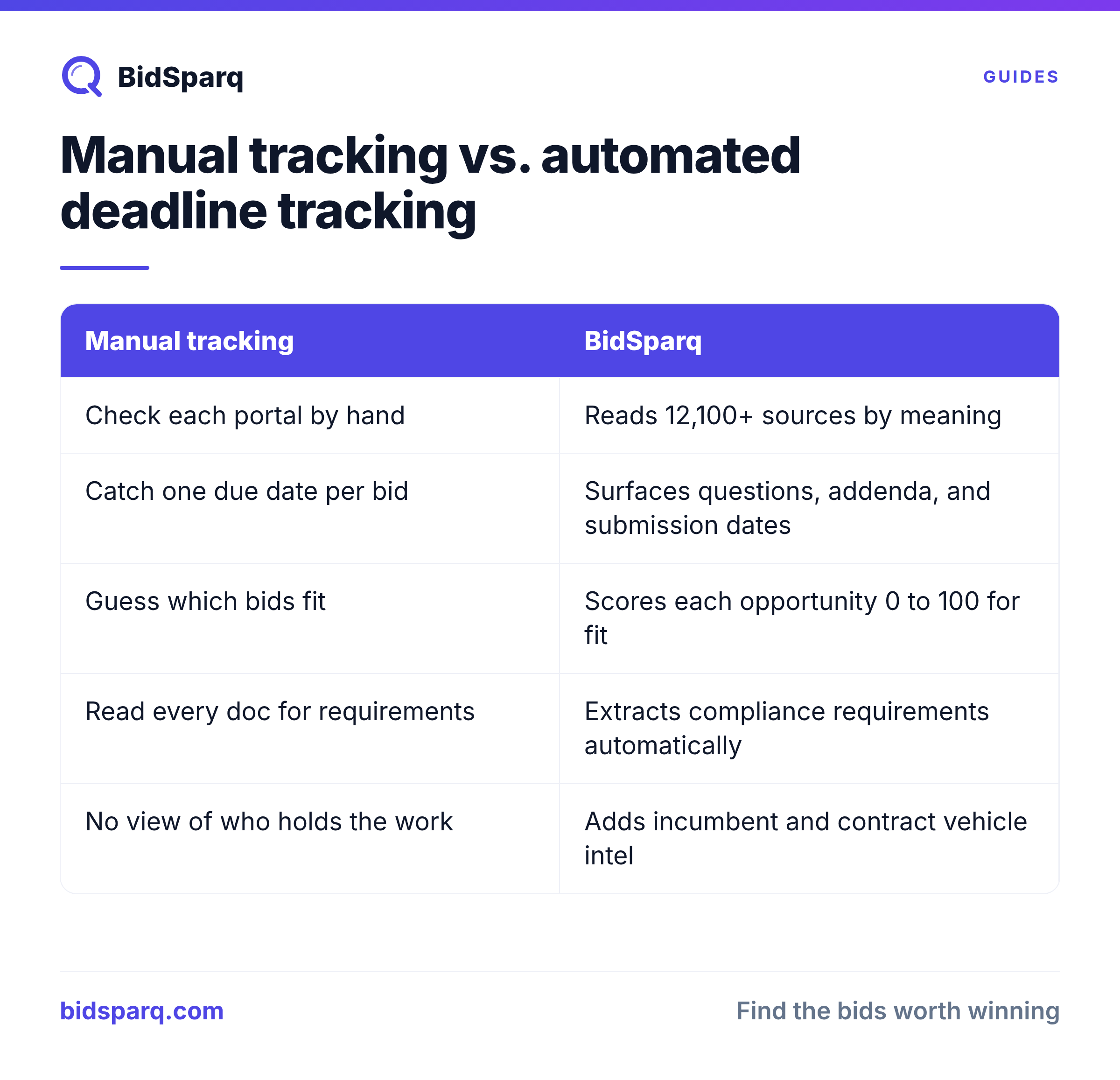
Stop hunting across sites and let semantic matching surface the deadlines worth tracking. Keyword alerts miss bids that describe your work in unfamiliar language and bury you in ones that merely share a word. This is where automation beats manual checking. BidSparq reads across 23,000+ sources by meaning, scores each opportunity from 0 to 100 for fit, and extracts compliance requirements and due dates automatically, so a tracked deadline arrives with context instead of just a calendar entry. Incumbent and contract vehicle intel tells you who holds the work now, which often decides whether a deadline is worth your time at all.
Ready to stop chasing dates across portals? See your matches free, no credit card needed, and let automated RFP and proposal deadline tracking work in the background.
FAQ
How do I track RFP and proposal deadlines across multiple portals?
Pull every open opportunity into one list and sort it by the next action date rather than checking each portal separately. Capture the buyer, the scope, and the three dates that matter so a single view replaces a dozen tabs and nothing depends on remembering to look.
What is the best way to never miss a proposal due date?
Work backward from the submission date to internal milestones for drafting, pricing, and review, then treat each milestone as its own deadline. Surfacing opportunities early matters just as much, because most due dates are missed weeks before, when the bid was never seen.
Should I track question deadlines separately from submission deadlines?
Yes. The question window usually closes well before submission and is your only chance to clarify requirements, and addenda can shift scope or the due date after you start. Tracking both, plus the addenda cutoff, keeps you from writing toward an outdated document.
Find RFPs that match your business
BidSparq monitors 23,000+ procurement sources and uses AI to score every opportunity against your capabilities. Try it free for 14 days.
Start Free Trial →